

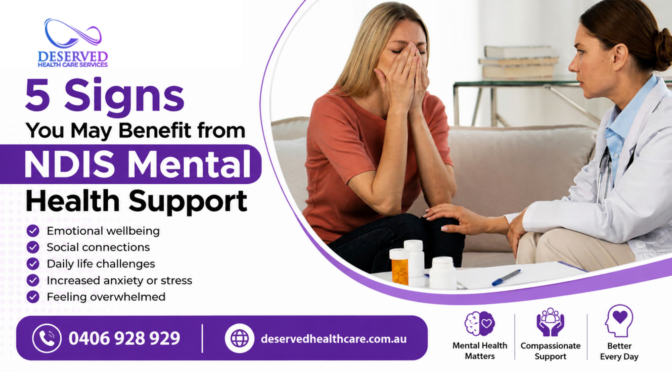
Struggling with daily tasks, isolation, or emotional overwhelm isn’t something you need to manage alone. NDIS mental health support connects eligible participants with funded, personalised care to rebuild routine, confidence, and independence. Here are five clear signs it might be time to explore your options.
1. Daily Tasks Feel Overwhelming
What does this sign look like? If cooking, cleaning, or personal hygiene routines feel impossible to keep up with, it’s a strong indicator you’d benefit from psychosocial disability support.
- Skipping meals or neglecting nutrition
- Struggling to maintain a clean, safe living space
- Losing track of medication schedules
A qualified mental health support worker in Point Cook can assist with structured routines that rebuild everyday capability.
2. Social Withdrawal and Isolation
Why does isolation matter for NDIS eligibility? Persistent withdrawal from friends, family, or community often signals that psychosocial disability is impacting your ability to function independently.

Community participation programs under disability mental health services are designed specifically to reduce isolation through:
- Supported social outings and group activities
- Skill-building workshops
- Peer support networks
3. Difficulty Managing Work or Study
Can NDIS support help with employment or education? Yes — if mental ill-health is consistently disrupting your ability to hold down a job or complete study, tailored support can bridge that gap.
Psychosocial recovery coaching focuses on building sustainable routines, workplace confidence, and study strategies suited to your capacity.
4. Repeated Hospital Admissions or Crisis Episodes
Does a history of crisis episodes qualify someone for support? Frequent hospital visits or mental health crises are among the clearest indicators that structured, ongoing support is needed rather than one-off intervention.
| Sign | Why It Matters |
| Multiple ED visits in 12 months | Suggests unmet daily support needs |
| Crisis team involvement | Indicates gaps in community-based care |
| Relapse after discharge | Shows the need for consistent follow-up support |
Accessing mental health support in Melbourne services early can reduce the frequency of crisis episodes through proactive, in-home care.
5. Family and Carers Are Feeling the Strain
Is carer burnout a valid reason to seek NDIS support? Absolutely — when family members are exhausted from providing constant care, it’s a sign the person they support needs professional, funded assistance.
Bringing in a trained support worker relieves pressure on carers while giving participants access to consistent, skilled care — a core benefit of disability support services.
How to Know If You’re Eligible
Who qualifies for NDIS Mental Health Support? You may be eligible if a psychosocial disability significantly and permanently affects your ability to participate in everyday activities, and you’re under 65 at the time of application.
- Diagnosed mental health condition affecting daily function
- Reduced capacity for self-care, social, or economic participation
- Support needs are likely to be lifelong or long-term
Why Choose Local, Melbourne-Based Support
Does location affect the quality of care? Working with a local provider means faster response times, better community connections, and support workers who understand Melbourne’s services and neighbourhoods.
A dedicated mental health support worker in Melbourne can coordinate with your GP, psychiatrist, and community programs — creating a genuinely joined-up care plan.
Take the Next Step Toward Better Mental Health
You don’t have to wait for a crisis to reach out. Deserved Health Care Services is here to start support services early so you don’t have to struggle with your problems alone. Whether you’re new to the NDIS or reassessing your current plan, our team can help you understand your eligibility and connect you with the right NDIS mental health support services near you. Book a free, no-obligation consultation today and take the first step toward a more supported, independent life.
Frequently Asked Questions
1. What is NDIS Mental Health Support?
It’s NDIS-funded assistance for people whose psychosocial disability affects their daily functioning and independence.
2. How do I apply for NDIS mental health funding?
You’ll need a psychosocial disability diagnosis and supporting evidence submitted through an NDIS access request.
3. Can a support worker help outside the home?
Yes, support workers assist with community access, appointments, and social participation as well as in-home tasks.
4. Is NDIS support only for severe mental illness?
No, it’s available to anyone whose psychosocial disability substantially limits everyday functioning, regardless of diagnosis label.
5. How quickly can I access Disability Mental Health Services?
Once your NDIS plan is approved, most Melbourne providers can begin support within one to two weeks.

