

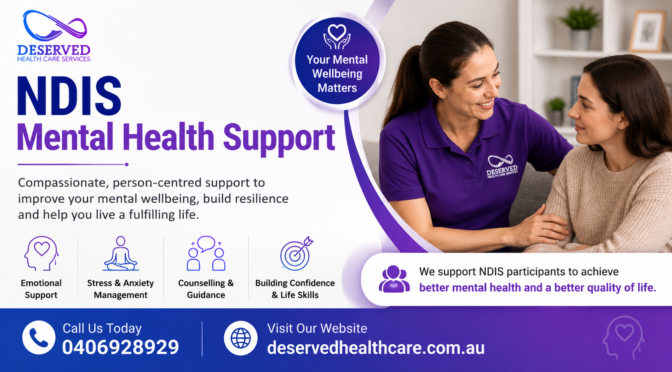
Mental health support is transforming through the National Disability Insurance Scheme. NDIS mental health support provides tailored assistance for people managing persistent conditions. Support workers play a critical role in helping participants reach their goals. These trained professionals deliver compassionate, skill-focused assistance that empowers recovery and independence.
What Is Psychosocial Disability?
Psychosocial disability refers to the impact mental conditions have on daily functioning. It’s not simply having a diagnosis; it’s the real-world barriers created by these conditions. Psychosocial disability support means funding practical help rather than clinical treatment. This distinction is vital for understanding NDIS coverage and available resources.
Key Support Categories Available
Support workers assist participants through several funded areas:
- Daily living assistance – help with meals, household tasks, personal care, and routines
- Community participation – support accessing social activities and engagement opportunities
- Goal-focused skill building – developing strategies for independence and wellbeing
- Therapeutic support – working toward recovery-oriented personal objectives
- Transport assistance – accessing appointments and community connections
How Support Workers Enable Mental Health Goals
Support workers take a personalised approach to mental health goals. They work closely alongside participants to understand aspirations and barriers. These professionals deliver evidence-based strategies tailored to individual circumstances.
Support workers focus on practical skill development. They help participants manage daily routines during challenging periods. They also support social reintegration and community involvement.
Specialised Skills and Qualifications
Effective support workers possess specific training in psychosocial recovery approaches. They understand trauma-informed practices and person-centred methodology. Many hold qualifications in mental health first aid. They know how to support participants during acute episodes and crisis periods.
A quality mental health support worker in Melbourne understands local mental health frameworks. They collaborate with treating professionals including psychiatrists and psychologists. They provide consistent, recovery-focused assistance tailored to each person.
Building Independence Through Support
Recovery isn’t about removing barriers alone; it’s enabling participation. Support workers teach daily living skills progressively. They encourage participants to engage in meaningful activities. This approach builds confidence and self-efficacy over time.
Mental health support in Melbourne now emphasises collaborative planning. Participants, support workers, and planners work together to set realistic objectives. Regular progress reviews ensure support remains aligned with changing needs.
The Recovery-Oriented Framework
The NDIS emphasises recovery-oriented practice alongside disability support. Support workers help participants identify their definition of meaningful living. They support practical steps toward personal goals and aspirations. This framework recognises that recovery is possible and individual to each person.
Getting Started With NDIS Mental Health Support
Accessing support begins with understanding eligibility requirements. Mental health conditions must demonstrate permanent, significant functional impact. Access requests require documentation from treating health professionals. Support coordinators can guide participants through the application process.
Once approved, participants work with planners to design their support package. Support worker hours and focus areas align with personal recovery goals. This planning conversation shapes the entire support experience.
Conclusion
Support workers are essential partners in mental health recovery under the NDIS framework. They provide practical, compassionate assistance enabling participants to pursue meaningful lives. Whether supporting daily routines or building community connections, these professionals empower lasting positive change.
Ready to explore your mental health support options? Contact Deserved Health Care Services today. Our experienced team understands the NDIS framework and specialises in recovery-oriented support. We’re here to help you achieve your mental health goals with dignity and respect.
-
- 📞 Call us: 0406928929
- 📧 Email: info@deservedhealthcare.com.au
- 🌐 Visit: https://deservedhealthcare.com.au/
Let us support your journey toward independence and wellbeing.
Frequently Asked Questions
1. What is the difference between NDIS mental health support and psychological treatment?
The NDIS funds practical support to maintain daily functioning and build skills, not clinical mental health treatment. Treatment remains the responsibility of the health system through GPs, psychologists, and psychiatrists.
2. Who qualifies for psychosocial disability support under the NDIS?
People with mental health conditions demonstrating permanent, significant functional impact on daily living qualify. Your treating professional must provide evidence that the condition affects your independence and wellbeing.
3. Can mental health support workers help me with household tasks and daily routines?
Yes, support workers can assist with meal preparation, household management, personal care routines, and daily living tasks. This assistance is particularly valuable during periods when symptoms affect your ability to manage independently.
4. How do support workers help achieve personal mental health goals?
Support workers collaborate with you to understand your aspirations, then develop practical strategies toward these goals. They provide ongoing encouragement, skill-building, and accountability within a recovery-oriented framework.
5. What qualifications should a mental health support worker have?
Quality support workers possess mental health first aid training, trauma-informed practice knowledge, and recovery-oriented coaching skills. Many hold qualifications in disability support or allied health backgrounds.
6. How does the recovery-oriented approach differ from traditional mental health support?
Recovery-oriented practice focuses on enabling meaningful participation and independence rather than managing symptoms alone. It emphasises your strengths, goals, and capacity for positive change throughout the support process.
7. Can NDIS support workers assist with social participation and community activities?
Absolutely, support workers can help you access community groups, social activities, recreational programs, and volunteer opportunities. This assists with rebuilding social connections and community involvement.
8. How do I access NDIS mental health support services?
Begin by contacting the NDIA or your support coordinator to discuss your mental health support needs. They’ll guide your through the planning process and help determine appropriate support categories and hours.
9. What happens during the NDIS planning conversation about mental health support?
Your planner discusses your mental health goals, current challenges, support network, and aspirations. Together, you’ll identify specific support categories, worker hours, and strategies aligned with your recovery journey and preferences.
10. How often should I review my mental health support plan with my support worker?
Regular reviews ensure your support remains effective and aligned with changing needs. Most participants benefit from quarterly or semi-annual progress discussions with their support worker and coordinator.

