

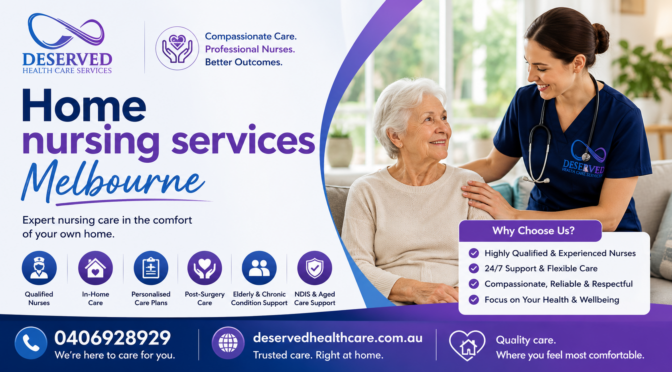
Navigating healthcare decisions for yourself or loved ones requires careful consideration. Many Australians today wonder if home nursing in Melbourne suits their current needs. Professional in-home medical support provides convenience, comfort, and personalised care. Understanding the right timing makes all the difference for families.
What Are Home Nursing Services?
Home nursing services in Melbourne deliver professional medical care within your own residence. Trained nurses administer medications, wound care, and health monitoring. They support recovery periods and manage chronic conditions effectively. Services adapt to individual health requirements and changing needs.
When Should You Consider This Care?
Post-Surgery Recovery
Recovery after medical procedures demands specialised attention at home. Professional nurses monitor healing progress and manage post-operative complications. They ensure medication schedules remain consistent and accurate. This prevents hospital readmission and promotes faster healing.
Chronic Condition Management
Living with ongoing health issues requires regular professional oversight. Nurses help manage diabetes, heart disease, and respiratory conditions. They provide education about symptom recognition and prevention. Consistent monitoring ensures conditions stay controlled and stable.
Aged Care Support
Older adults benefit from age-appropriate nursing assistance in familiar environments. Professional carers help with daily health needs and mobility support. They reduce fall risks and promote independent living as much as possible. Family peace of mind increases significantly with professional support.
Disability Support
NDIS nursing care in Melbourne assists individuals living with various disabilities. Trained professionals provide personalised disability support tailored to specific requirements. Services include mobility assistance, health monitoring, and skill development. This empowers people to maintain autonomy and dignity at home.
End-of-Life Care
Palliative nursing provides compassionate support during difficult times. Professionals manage pain and ensure comfort throughout this journey. They offer emotional support to both patients and their families. Dignity and peace remain priorities in every interaction.
Key Benefits of Home Nursing
- Familiar, comfortable environment promotes faster recovery
- Personalised care plans address individual health needs
- Reduced infection risks compared to hospital settings
- Increased family involvement in healthcare decisions
- Greater flexibility with scheduling and treatment options
- Cost-effective compared to ongoing hospitalisation
Signs You Might Need Professional Support
Notice if managing medications feels overwhelming at home. Watch for wounds requiring frequent dressing changes. Consider if mobility assistance prevents daily activities. Recognise when family members feel exhausted from caregiving. Assess whether health monitoring exceeds your current abilities.
What Disability Nursing Support Offers
Disability nursing support in Melbourne emphasises independent living and skill development. Nurses work collaboratively with NDIS plans and goals. They respect individual choices while ensuring health and safety. Support focuses on empowerment rather than dependency.
Making the Decision
Consult your doctor about your specific health requirements. Discuss available options with family members openly. Consider your home environment and accessibility features. Evaluate financial options and insurance coverage carefully. Request initial assessments to determine suitability.
Conclusion
Choosing professional nursing care represents a significant healthcare decision. Whether managing recovery, chronic illness, disability needs, or aged care, professional support improves quality of life substantially. Don’t hesitate to explore options that suit your circumstances.
Ready to discuss your home nursing needs? Contact Deserved Health Care Services today for a confidential consultation. Call us on 0406928929 or email info@deservedhealthcare.com.au. Visit https://deservedhealthcare.com.au/ to learn more about how we support your wellbeing at home.
Frequently Asked Questions
- What qualifications do home nurses possess?
All registered nurses hold formal nursing credentials and relevant certifications. They undergo continuous professional development for the latest healthcare practices. - How often should nurses visit for chronic condition management?
Visit frequency depends on your specific health needs and medical requirements. Your doctor determines the appropriate schedule during initial assessment. - Does private health insurance cover home nursing costs?
Many policies include coverage for home nursing services and care. Contact your insurer to clarify your specific policy benefits. - Can family members receive training from nurses?
Yes, professional nurses frequently provide education and training to family members. This builds confidence and supports ongoing care at home. - What happens if health needs change suddenly?
Care plans adjust flexibly to accommodate changing health circumstances. Nurses communicate with doctors to modify support as needed. - Is home nursing appropriate for dementia care?
Professional support helps manage dementia-related health issues effectively at home. Specialised training assists with behavioural and medical challenges. - Can home nurses administer injections and medications? Registered nurses can administer all prescribed medications and injections safely. This ensures accurate dosing and proper medical management.
- What equipment do nurses typically provide or arrange?
Nurses coordinate equipment needs through suppliers or healthcare providers. They ensure all necessary items are available and functioning. - How do I start the process of arranging services?
Contact a nursing provider for an initial consultation and assessment. Discuss your needs, health situation, and care goals. - Is 24-hour nursing care available if required?
Many providers offer flexible scheduling from part-time to around-the-clock support. Availability depends on individual requirements and provider capabilities.

